Centrifugal Pumps
Centrifugal pumps are the most common type of pump used in industry, agriculture, and municipal water applications. They operate on a simple principle: rotational energy, typically from an electric motor, is converted into energy in a moving fluid.
- How it works: A rotating impeller accelerates the fluid radially outward. The casing then slows down the fluid, converting velocity into pressure.
- Applications: Water supply, irrigation, pumping sewage, and chemical processing.
- Key Advantage: Smooth flow, simple design, and high efficiency for low-viscosity fluids.
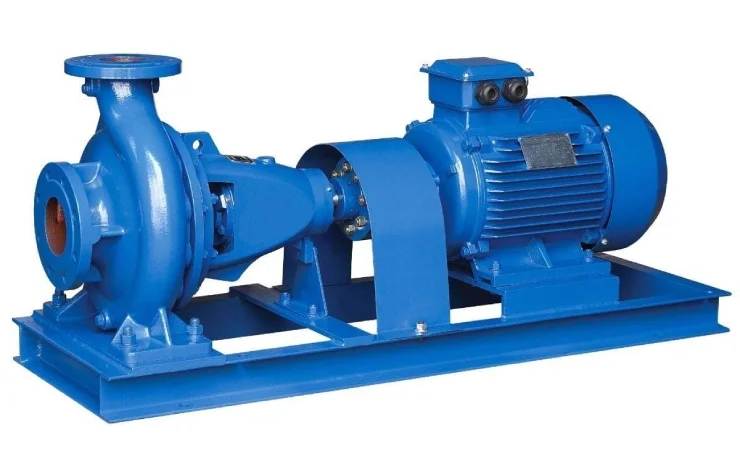
Centrifugal Pump
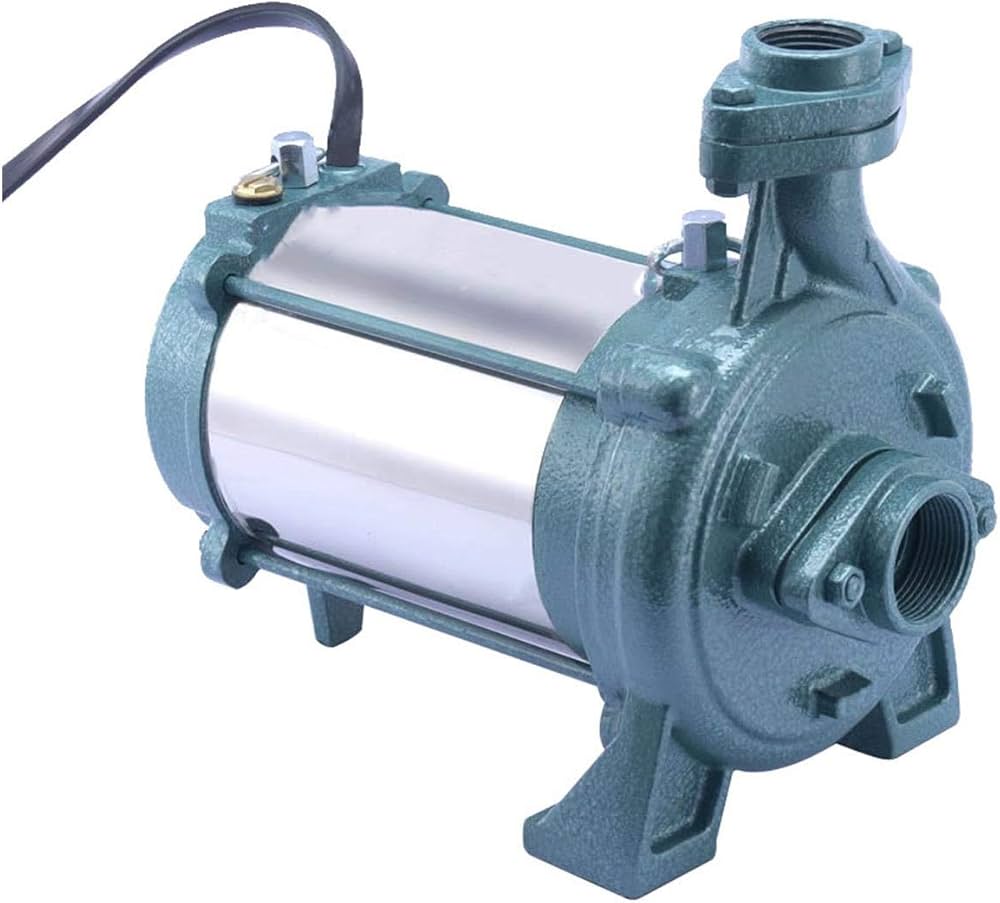
Submersible Pump Unit
Submersible Pumps
A submersible pump (or electric submersible pump - ESP) is a device which has a hermetically sealed motor close-coupled to the pump body. The whole assembly is submerged in the fluid to be pumped.
- Advantage: Prevents pump cavitation (a problem associated with a high elevation difference between pump and liquid surface).
- Efficiency: Pushes water to the surface rather than pulling it, making it more efficient than jet pumps.
- Use Cases: Borewells, deep wells, drainage, and sewage pumping.
Open-well Submersible Pumps
Open-well pumps are designed for applications where the water level fluctuates significantly. Unlike borewell pumps, these are installed at the bottom of an open well or tank.
- Design: Water-cooled motor ensures durability even in submerged conditions.
- Versatility: Can be used in underground tanks, canals, and irrigation wells.
- Construction: typically made of Cast Iron or Stainless Steel for corrosion resistance.
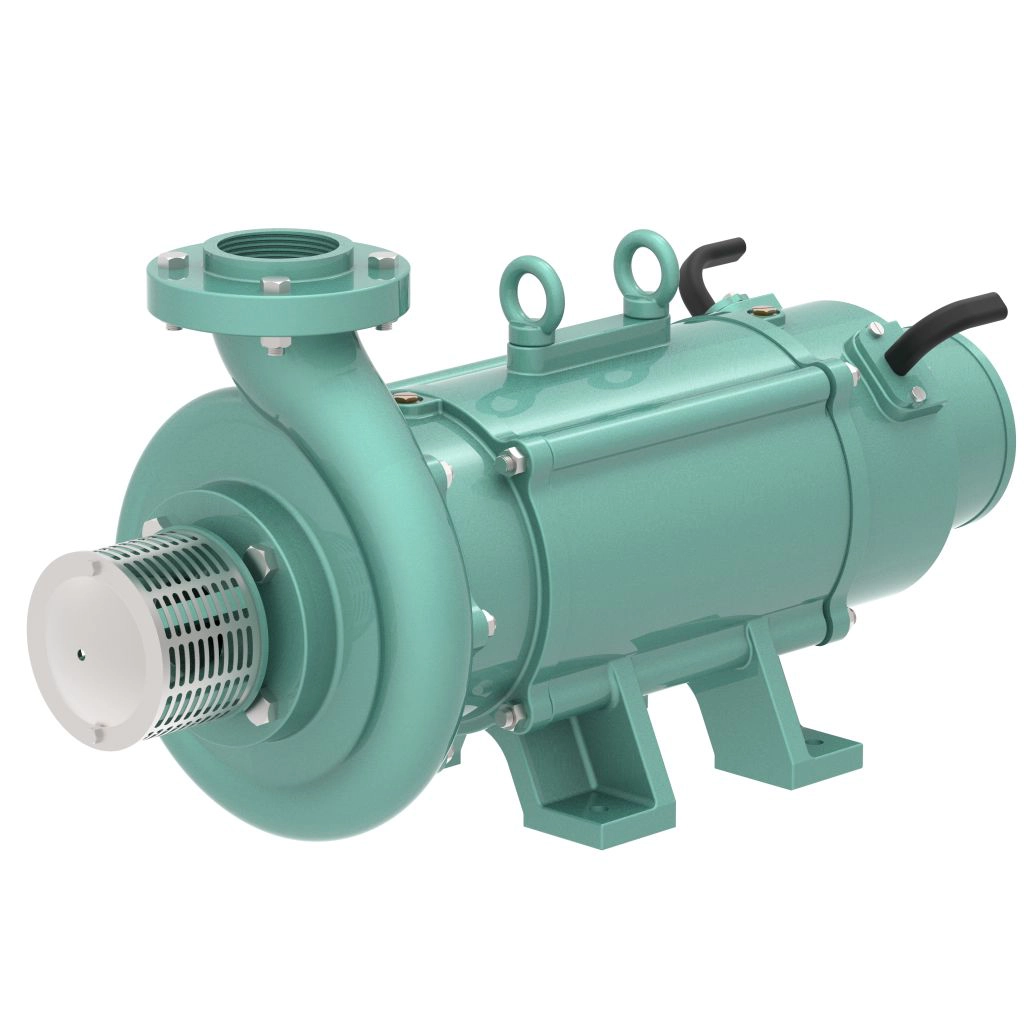
Openwell Submersible Pump